Jul 16, 2026
Press
WASHINGTON, D.C. – Today, the bipartisan Barcode Automation for Revenue Collection to Organize Disbursement and Enhance (BARCODE) Efficiency Act (H.R. 6956), led by Congressman Rudy Yakym (IN-02) and Congressman Brad Schneider (IL-10), passed out of the Ways and Means Committee. The bill requires the IRS to acquire the technology to speed up paper return processing that will save taxpayer dollars and deliver refunds faster.
“The BARCODE Efficiency Act is a commonsense step toward bringing the IRS into the 21st century,” Rep. Yakym said. “By requiring scannable barcodes and digital filing so the IRS can process paperwork without manually typing in information, this bill will reduce errors, speed up processing, and save time for both taxpayers and the agency. It’s smart, efficient reform that strengthens service without adding unnecessary hoops. I’m grateful to my colleague Rep. Brad Schneider for his partnership and Chairman Smith for his support.”
“Congress took an important, bipartisan step forward today to modernize our tax system, unanimously passing my BARCODE Efficiency Act through the Ways and Means Committee,” Rep. Schneider said. “I look forward to this bill swiftly moving to full passage by the House. When this bill becomes law, taxpayers can count on quicker service and fewer errors by the IRS as they process tax returns. Speaker Johnson should bring it to the floor as soon as possible. I extend my appreciation to my colleague, Rep. Rudy Yakym, for his partnership in advancing this commonsense legislation and to Ways and Means Chairman Smith and Ranking Member Neal for supporting our efforts in the Committee.”
“The Ways and Means Committee is focused on ensuring Americans receive a higher quality and more timely level of service from the IRS,” Ways and Means Committee Chairman Jason Smith (MO-08) said. “Streamlining and modernizing how the agency receives and processes paper returns will reduce the likelihood of delays, save taxpayer dollars, and get tax refunds into the hands of hard-working Americans faster and more efficiently. I appreciate Representative Yakym’s leadership on this legislation and for being a strong champion for American taxpayers and IRS modernization.”
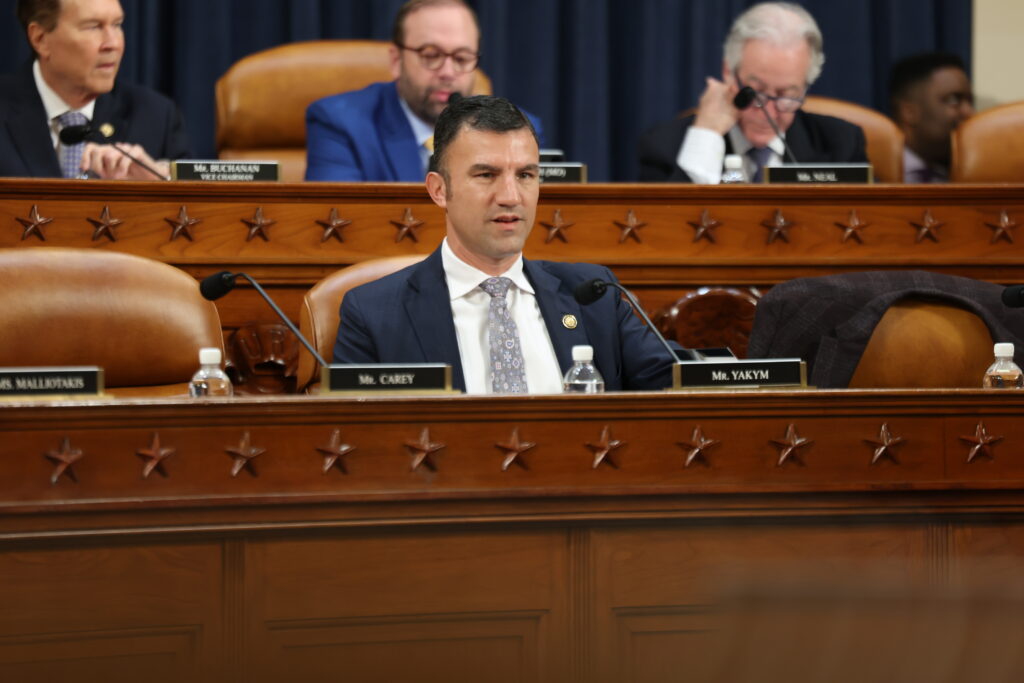
Watch Congressman Yakym speak in support of the bill HERE.
Read full bill text HERE.
Background:
Since launching an electronic filing pilot in 1986 and expanding it nationwide in 1990, IRS e-filing has grown to 155 million returns in 2025. Even so, millions of Americans still file on paper, including about 10.5 million paper returns last year. According to the Taxpayer Advocate Service’s July 2025 report, while the 2025 filing season was largely successful, paper returns and correspondence continued to face processing delays, largely because of manual data entry. The report urged the IRS to modernize how it handles paper submissions to reduce backlogs.
Although Treasury can set standards for machine-readable tax forms, current law prevents it from requiring individuals, estates, and trusts to file returns in any format other than paper. As a result, the IRS still spends significant time and resources manually entering data from paper filings.
H.R. 6956, the BARCODE Efficiency Act, would modernize this process by requiring electronically prepared returns that are printed and mailed to include a scannable barcode. This barcode would contain all return data, allowing the IRS to upload information through scanning technology instead of manual entry. The bill also directs the IRS to use scanning technology to transcribe handwritten returns and paper correspondence. Together, these changes would speed up processing, reduce errors, cut backlogs, and free IRS staff to focus more on customer service and other critical needs.
###
WASHINGTON, DC – JULY 04: President Donald Trump holds up the “One, Big Beautiful Bill” Act that was signed into law during an Independence Day military family picnic on the South Lawn of the White House on July 04, 2025 in Washington, DC. After weeks of negotiations with Republican holdouts Congress passed the One, Big Beautiful Bill Act into law. The bill makes permanent President Donald Trump’s 2017 tax cuts, increases spending on defense and immigration enforcement and temporarily cuts taxes on tips, while cutting funding for Medicaid, food assistance and other social safety net programs. (Photo by Alex Brandon – Pool/Getty Images)